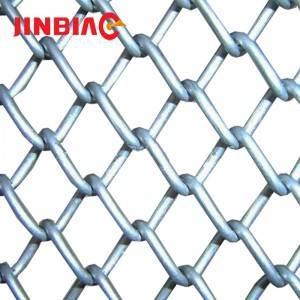
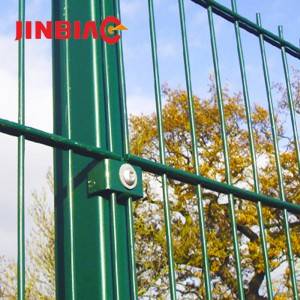
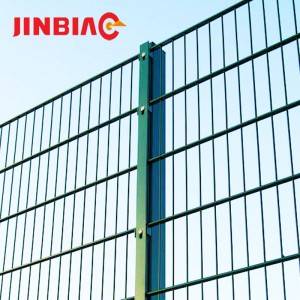
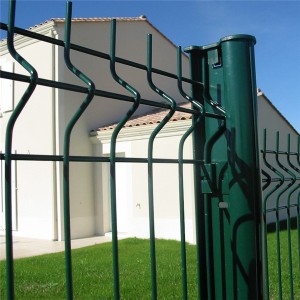
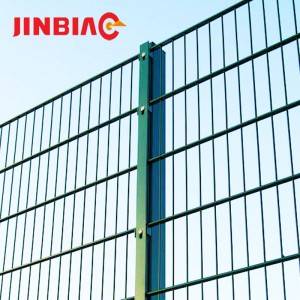
A 358 security fence is a welded mesh perimeter fence built to a 3 inch by 0.5 inch aperture from 8 gauge wire, welded at every intersection and mounted on steel posts. The name is the specification: 3, 5 and 8 stand for the aperture dimensions and the wire gauge. The tight, small-opening mesh gives no foothold and is slow to cut by hand, which is why it is the standard choice for prisons, airports, military sites, substations, data centres and industrial perimeters where the boundary has to resist a determined intruder rather than simply mark a line.
Why the 358 security fence geometry works
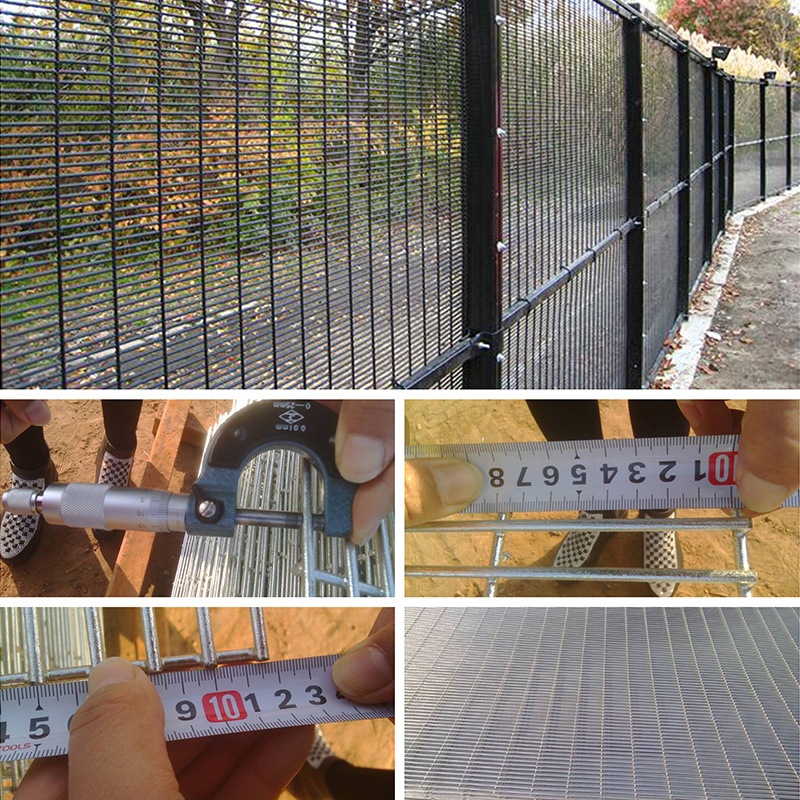
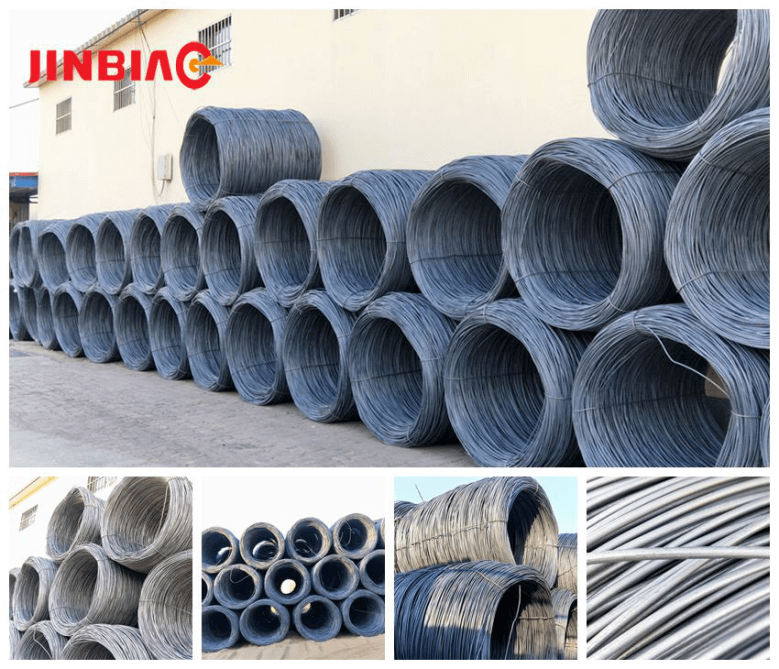
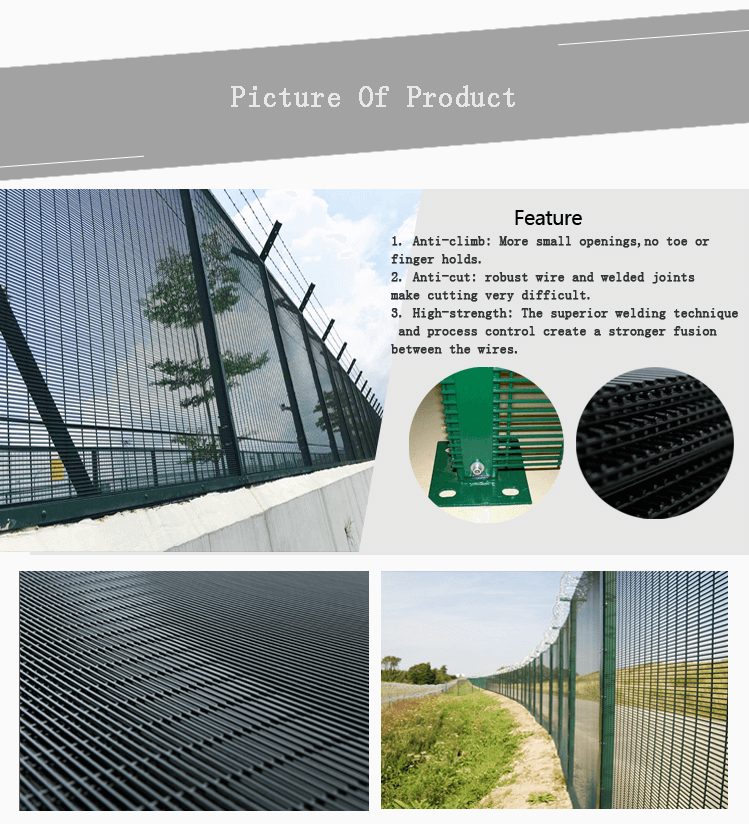
Most perimeter fencing relies on height. A 358 security fence relies on the aperture. At roughly 76 mm by 12.7 mm, the opening is too small to take a boot or a handhold, so the panel cannot be climbed in the way a chain link or a wide-aperture welded mesh can. The 8 gauge wire — around 4 mm — is heavy enough that bolt cutters struggle to reach through and get purchase, and because the mesh is welded at each crossing point, cutting one wire does not release a whole section of panel. Those two properties, not the coating or the colour, are what the product is bought for.
358 security fence posts and fixings
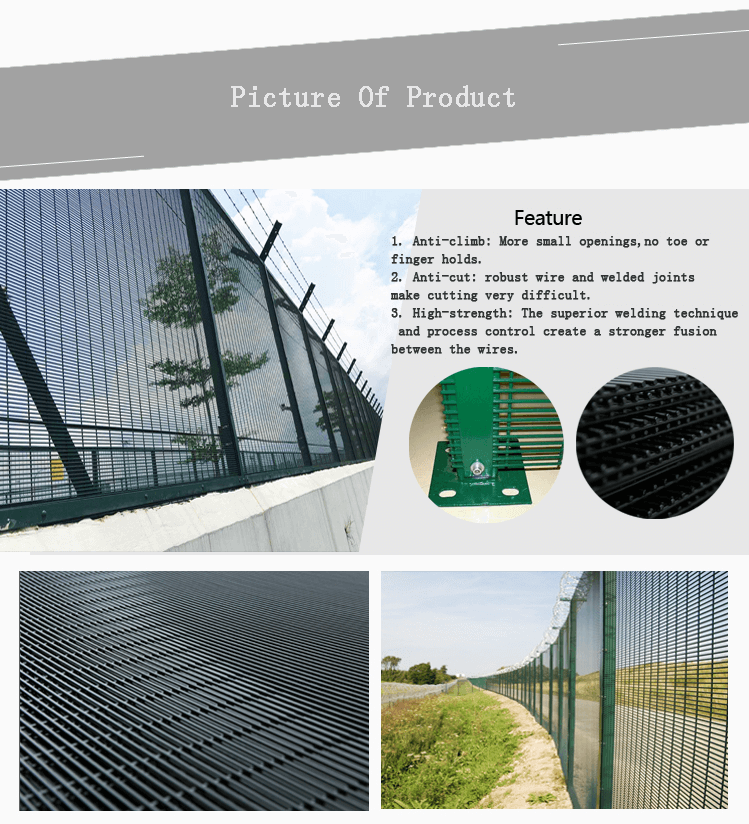
The panel is only as secure as its weakest connection, and on a 358 security fence that is usually the fixing rather than the mesh. Square posts are the common choice, with C-section posts used where a flatter profile is wanted against a wall or a boundary line. Panels are attached with clamp bars or brackets that grip across the full panel width; a fixing that pinches at two points leaves a gap a lever can exploit. Post spacing follows panel width and wind load, and the post foundation is designed for the fence height plus whatever topping is fitted.
358 security fence height and toppings
Typical installations are two to three metres of mesh with a topping above it. Razor wire or concertina coils can be added on cranked arms to increase the effective height without raising the panel, and spike toppings are used where a less aggressive appearance is required. Layering matters: a single 3 m panel is less effective than 2.4 m of mesh plus a topping, because the topping is what defeats the climber who has already reached the top of a panel.
358 security fence coating and corrosion
Three finishes cover most work: hot-dip galvanizing for the longest service in exposed or coastal conditions, electro-galvanized for sheltered inland sites at lower cost, and powder coating over a galvanized substrate where colour matters or where the fence is part of a public elevation. Because a 358 security fence has thousands of weld points, the quality of the galvanizing at the welds — not just on the wire — is what determines whether the fence starts showing rust at five years or at fifteen. Cut ends, post caps and gate frames deserve the same attention.
Where security and noise meet
A site boundary often has to do both jobs. A 358 security fence and acoustic panels can be mounted on the same post line, with the security mesh carrying the perimeter duty and absorptive acoustic panels fixed above or alongside it. This is common on substations, data centres and industrial plants where a noisy installation also needs a controlled perimeter. It is cheaper than two separate fence lines, but it has to be designed as one structure from the start — the post has to carry both loads, and the acoustic panel must not become a climbing aid.
Gates and interfaces
Gates are matched to the panel system so that the perimeter has no weaker element. Double-leaf vehicle gates, single pedestrian gates and sliding gates are all built on the same mesh and post family, with hinges and locking arrangements sized for the panel weight. The interface between a 358 security fence and an existing wall, building or acoustic barrier is where gaps usually appear, so those junctions are worth detailing rather than improvising on site.
Typical specification range
| Item | Typical range |
| Mesh aperture | Approximately 76 × 12.7 mm (3 in × 0.5 in) |
| Wire | 8 gauge, welded at every intersection |
| Square post | 40×60, 60×60, 60×80, 80×100, 80×120 mm |
| C-section post | 64×83 mm |
| Surface treatment | Hot-dip galvanized, electro-galvanized, or powder coated |
| Colours | Green, blue, black, white, yellow, red |
| Toppings | Razor wire, concertina coil on cranked arms, or spikes |
What to send for a quotation
Perimeter length and the maximum panel height, the security level or the standard the site is designed to, whether a topping is required, the exposure category for the coating decision, post spacing constraints, gate positions and the number of leaves, and whether acoustic panels are to share the same post line.
FAQ
1.What is a 358 security fence and where does the name come from?
The name refers to the mesh geometry – approximately 3 inch by 0.5 inch apertures formed from 8 gauge wire – which gives a small opening that is difficult to climb or cut.
2.Why is a 358 fence considered anti-climb and anti-cut?
The narrow apertures give no foothold for climbing and the heavy wire and close spacing make hand cutting tools slow to use.
3.Where is a 358 fence normally specified?
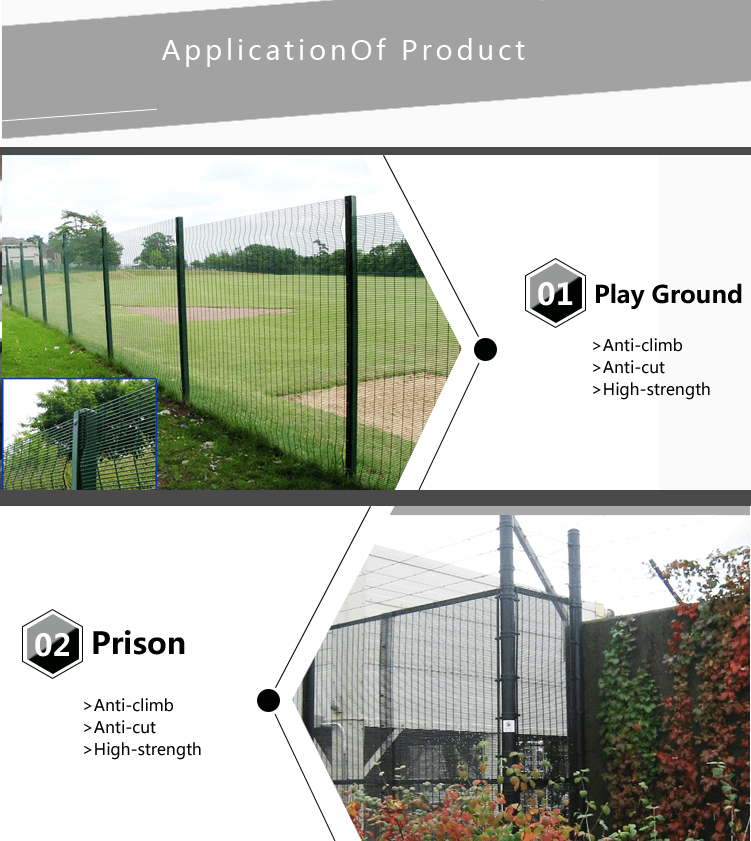
Airports, substations, data centres, prisons, industrial plants and other sites where a high-security perimeter is required.
4.Can a 358 fence be combined with acoustic panels?
Yes – security mesh and acoustic panels are sometimes combined on the same post line where a site boundary has both security and noise requirements.
5.Which surface treatment lasts longest?
Hot-dip galvanizing gives the longest service in exposed and coastal conditions. Electro-galvanized finishes suit sheltered inland sites, and powder coating is added where colour is required.
6.How high can a 358 fence be built?
Panels are commonly supplied up to about three metres, with razor wire or spikes above. Total height is normally set by the security standard the site is designed to, and the post foundation follows that height.